Surgery, Gastroenterology and Oncology

|
|
Human activities like the radioactive sources usage in radiotherapy for cancer tend to negatively impact the environment. Some radioactive sources are associated with pharmaceutical preparations with high levels of natural radioactivity. This is what occurs in all oncology treatment centers. Therefore, the study's objective was to examine the health risk posed by naturally occurring radiation from Middle Euphrates center(MECC) cancer and the area close to it. In this work, gamma spectrometric analysis NaI(Tl) of (3"×3") was done to determine the activities concentration of 226Ra, 232Th and 40K in 13 soil samples. The average specific activity of these nuclei in Bq.kg-1 were (8.889 ± 0.878, 6.810 ± 0.446, and 360.288 ± 3.753), respectively. Thus, the average (Raeq) value was (46.372 Bq.kg-1). Raeq readings were discovered to be lower in every sample than the global value of 370 Bq.kg-1. The average values for (AEDE) were reported as being (0.180 mSv.y-1), which is smaller than (0.48 mSv), the global average. The absorbed doses rate was found to be (26.481nGy.h-1). The Annual Gonadal Dose Equivalent (AGED) was determined to be (161.456 Sv.y-1), which is lower than the global average of 300 (Sv.y-1), and the External Hazard Index Hex was found to be (0.119), all of which had average values that were less than unity. The excess lifetime cancer risk (ECLR) had an average value of (0.605 x 10⁻³). This number short of the globally accepted level of (2.9 x 10⁻³). The study's findings indicate that there were no health risks associated with the natural radioactivity of the region (found in soil samples).
Introduction
Numerous investigations were conducted on this topic following the 1896 discovery of radioactivity (1). A significant aspect of human life is radiation and radioactivity, which is the statistical and natural process by which unstable parent nuclei release energy to transform into more stable daughter nuclei (2). Beta, alpha, and gamma rays are examples of nuclear particles or waves that are emitted as a result of the energy produced during the transformation process. Ionizing radiation is the term used to describe these discharges (3). The scientific community began debating the radioactively hazardous nature of ionizing radiation as early as 1920–1930. Ionizing radiations are dangerous to biological tissues because they produce charge when they enter biological materials (4). Empirical and epidemiological data have indicated that radioactive materials have carcinogenic tendencies for skin cancer, that widespread among early dentists and radiologists because of the exposure to radio-active components. According to reports, peoples survived from the Hiroshima atomic explosion exposed to radiation above 100 rem, which caused them to get leukemia (5). There are two types of ionizing radiation damage to biological cells: short- and long-term. The short-term exposure to radiation may result in radio-active side effects, although long-term effects may not manifest for many years (6). The interactions of ionizing radiation with cell during exposure and tissues after exposure may lead to changes in chromosomal layout and mitotic processes, which may eventually cause the creation of malignant cells, depending on the severity. This ionizing radiation can cause short-term or permanent harm. Damaged cells and tissues may occasionally be able to recovered from the effect of radiation exposure that it is less severe (7). Human exposures to naturally occurre radionuclides can come from both man-made and natural sources. Large-scale exposure is significant from a health physics standpoint as it indicates a higher degree of danger (8). According to studies, natural background radiation from sources such cosmic rays, radon gases and terrestrial radio-nuclides accounts for around 80% of these ionizing radiations. Both with non-series radionuclide of potassium (40K), series radionuclides of uranium-radium (238U-226Ra) and thorium (232Th) make up terrestrial radionuclides (9). Trash disposal is one example of a man-made activity that might raise ionizing radiation levels. The ecosystem and public health are negatively impacted by these actions. They contaminate water supplies, wildlife, plants, soil, and air. Soil serves as one of the primary reservoirs for these naturally occurring radionuclides. The radioactivity of soil samples taken from several locations in Iraq was tested using an iodide sodium system triggered by thallium 3. The results indicated that the radioactivity for 226Ra, 232Th, and 40K was below an internationally recommended standards (10). Researchers on Iraq's Ya-Hussain road (Najaf/ Karbala) calculated the values of 226Ra, 232Th and 40K as well as their radiological dangers, yearly effective dosage, and lifetime cancer risk (ELCR) by a NaI(Tl) gamma-ray spectrophotometer detector. The findings demonstrated which the quantities were below the global average, proving the safety of the region and the absence of radiation in the samples (11). The specific activities of 226Ra, 232Th and 40K was calculated from a soil of Al Rahmah, Najaf, Iraq, using a gamma-ray spectrometer systems NaI (TI) detectors. Additionally, indicators of internal and external hazards, internal and external absorbed doses, and radium equivalent activity were calculated, along with the annual total effective doses and lifetime cancer risks (ELCR) that were beneath internationally recommended limits (12).
Using a NaI (Tl) detectors to evaluated the activities values in soils samples taken at random from the heart of Al-Diwaniyah, Iraq, to determined that the average values were 238U, 232Th and 40K. Findings demonstrated that activity concentrations on average were lower than the level published by the United Nations Scientific Committee on the Effects of Atomic Radiation (UNSCEAR) (13).
The work is aimed at carry out measurements of the activity amounts for radionuclides from the soil samples, then used to carrying out health risks assessment in term of radium equivalent activities, gamma representative levels indexes, external hazard indexes, absorbed doses rates in air, annual gonadal doses equivalent, the annual effective doses equivalent and excess lifetime cancer risks.
MATERIAL AND METHODS
Study Area
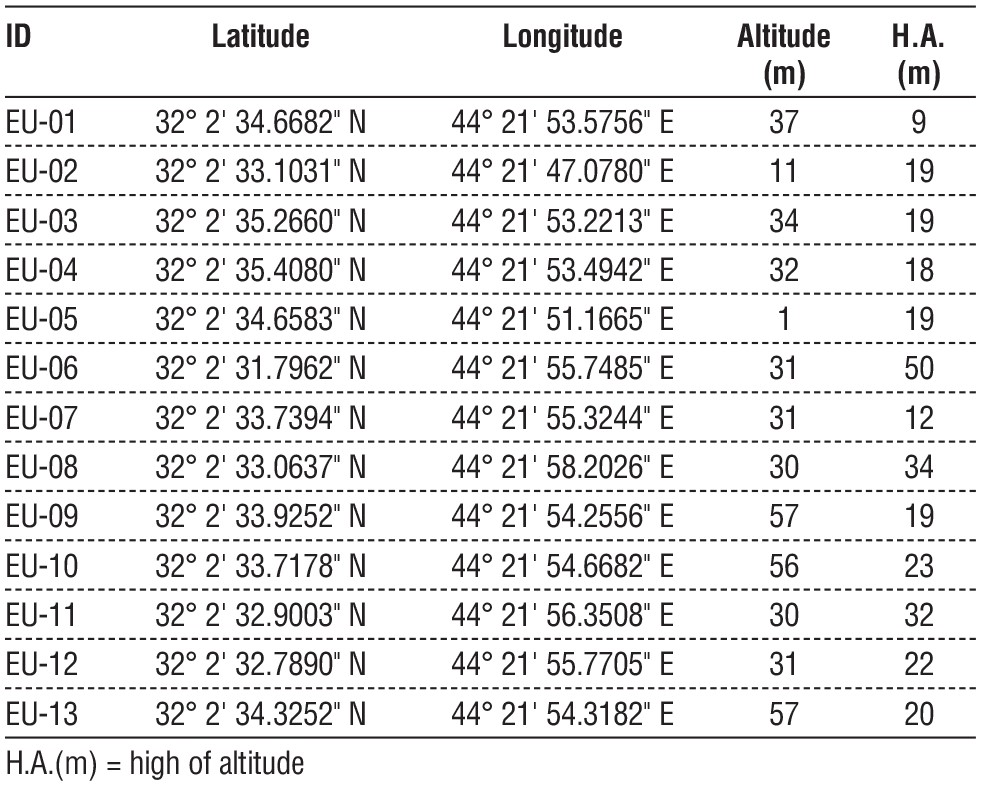
Middle Euphrates Oncology Center is a free governmental institution that provides medical services to patients. According to table 1, which displays the coordinates of the samples under study, it is situated in the city's center.
Table 1 - Latitude and longitude of the studied locations
Collection and Preparation of Samples
Purposive random sampling used to collected soils samples from the MECC in Najaf at a depth of 20–50 cm from thirteen distinct places. Samples pound and dried in an oven at 120 OC to eliminate moisture. Then, each sample homogenized and sieved to 200-mesh size. Then weighing 1 kg and put into a marinelli beaker. Then sealed for 30 days to allow 226Ra, 232Th and their corresponding offspring to reach radioactive secular equilibrium (14).
Gamma-ray Spectrometry
The radioactivity measured by a NaI(Tl) system, which consist of a scintillation detectors NaI(Tl) with a 3" x 3" crystal dimension, provided by Alpha Spectra, Inc. 12I12/3, coupled with a multichannel analyzer (MCA) (ORTEC Digi Base) with a range of 4096 chan nels connected to an ADC (Analog to Digital Convertor) unit, To prevent background radiation, the detector is covered with lead shielding. The spectral data was directly transmitted to the lab's PC using the MAESTRO32 program. The configuration and geometry of the samples were maintained throughout the examination, and they were counted for 30,000 seconds in a consistent manner.
Calculations
Risk assessment of radionuclides
Depending on the specific radioactivity(Ai) (11), was determined Radium equivalent activity (Raeq), annual effective dose equivalent (AEDE), absorbed dose rate (DR), annual gonadal dose equivalent (AGED), representative level index (RLI), external hazard index (Hex), and excess lifetime cancer risk (ELCR) were the radiological metrics used to estimate risk.
Radium equivalent activity (Raeq)
The radium equivalent activity Raeq is utilized in order to increase the distribution of natural radio-activity in soil and attain uniformity with respect to radiation exposure (15). It is the weighted sum of the activity concentrations of 40K, 232Th, and 226Ra, assuming 370 Bq.kg-1. It can be calculated using equation 1 (16).
Raeq = ARa/370 + ATh/259 + AK/4810 (1)
which is equivalent to
Raeq = ARa + 1.43 ATh + 0.077 AK (2)
(ARa, ATh and AK) are the specific activity in (Bq.kg-1)
of 226Ra, 232Th, and 40K, respectively (17).
Absorbed dose rate in Air (DR)
The rate of dosage absorption is influenced by the particular activity of 226Ra, 232Th and 40K in soil with the presumption that other radioactive isotopes are insignificant, as their contributions to the overall background radiation contribution are quite minimal (18).
Equation 3's relation was used to determine the absorbed dosage rate.
DR(nG.h-1) = 0.462 ARa + 0.604 ATh + 0.0417 AK (3)
Annual effective dose equivalent (AEDE)
For the annual effective dose equivalent, mSv. y-1 was the unit of measurement. The dose that soil radioactivity concentrations provide to the general public was calculated using equation 4.
AEDE(mSv.y-1) = D(nGy.h-1) x 8760 (h)x 0.2 x 0.7 (Sv.Gy-1) x 10-6 (4)
D is the absorbed dose rate, measured in nGy h-1, and the conversion factor between the absorbed dose and effective dose is 0.7 SvGy-1, 0.2 stands for the outdoor occupancy factor (19), and the time for a year is 8760 hours, and the conversion factor is 10-6.
Annual Gonadal Dose equivalent (AGED)
The gonads are regarded as organs of interest for dosimetry purposes, per UNSCEAR (2010). The male testes and the female ovaries are the main reproductive organs (20), Due to their high radio sensitivity, the International Commission for Radiation Protection placed special emphasis on these members, stating that every attempt should be made to lower the gonadal dose to the general public (21). It is also known that the bone marrow, which makes red blood cells, is impacted by elevated AGED levels. This can result in leukemia, a blood cancer that is frequently fatal. The thyroid, lungs, liver, colon, and bladder are further noteworthy organs (22,23), equation 5 is used to calculate the annual gonadal dose equivalent AGED in μSv.y-1 (24):
AGED (μSv.y-1) = 3.09 ARa + 4.19 ATh + 0.314 AK (5)
Representative level index (RLI)
The gamma radioactivity RLI connected with natural radioactive substances and can be calculated using the formula below (25):
RLI = 1/150 ARa + 1/100 ATh + 1/1500 AK (6)
External Hazard Index (Hex)
The hazard index is used to measure radiological dangers as a single quantity because different radio-nuclides contribute to the overall gamma dose that humans receive. Equation 7's relation was used to calculate the External Hazards Index (26), The Hex must be less than one for radiological purposes in order to minimize the risk of radiation exposure (16).
Hex = ARa/370 + ATh/259 + AK/4810 ≤ 1 (7)
Excess Lifetime Cancer Risk (ELCR)
Using equation 8, the chance that a person will get cancer over their lifetime at a particular exposure is determined by the excess lifetime cancer risk (ELCR) for outdoor exposure.
ELCR = AEDE × DL × RF (8)
where DL and RF stand for life expectancy (70 years) and risk factor, respectively Sv-1. For public use, Global Agency for Radiological Protection (ICRP) used a stochastic impact value of 0.05 (27).
Statistical Analysis
The surfer (version 23) program was used for the purpose of drawing radioactive maps between the
variables that were calculated with the above-mentioned equations, and this version was also used for the purpose of calculating all the statistical variables of the Raeq(Bq/kg) as Minimum, Maximum, Mean, Median, Variance, Standard Deviation, Mean Difference, Standard Error.
RESULT AND DISCUSSION
Analysis of the soil's (226Ra, 232Th, and 40K) activity concentrations in the dumpsite are presented in table 2, also Raeq (radium equivalent activity) and DR (absorbed dose rate) in air. The specific activity in (Bq.kg-1) of (226Ra, 232Th and 40K) were 8.889 ± 0.878, ranging from 0 to 39.2 ± 1.22, while the for 232Th the average was 6.810 ± 0.446 ranging from 0.9 ± 0.33 to 19.56 ± 0.64 and 40K average 360.288 ± 3.753 ranging from 117.46 ± 2.47 to 746.69 ± 5.1. It is clear that the specific activity of (226Ra, 232Th and 40K) were below the critical values of (35, 30 and 400) Bq.kg-1 (22).
Table 2 - Activity concentrations 226Ra, 232Th and 40K, radium equivalent activity Req and absorbed dose rate DR from Soil samples
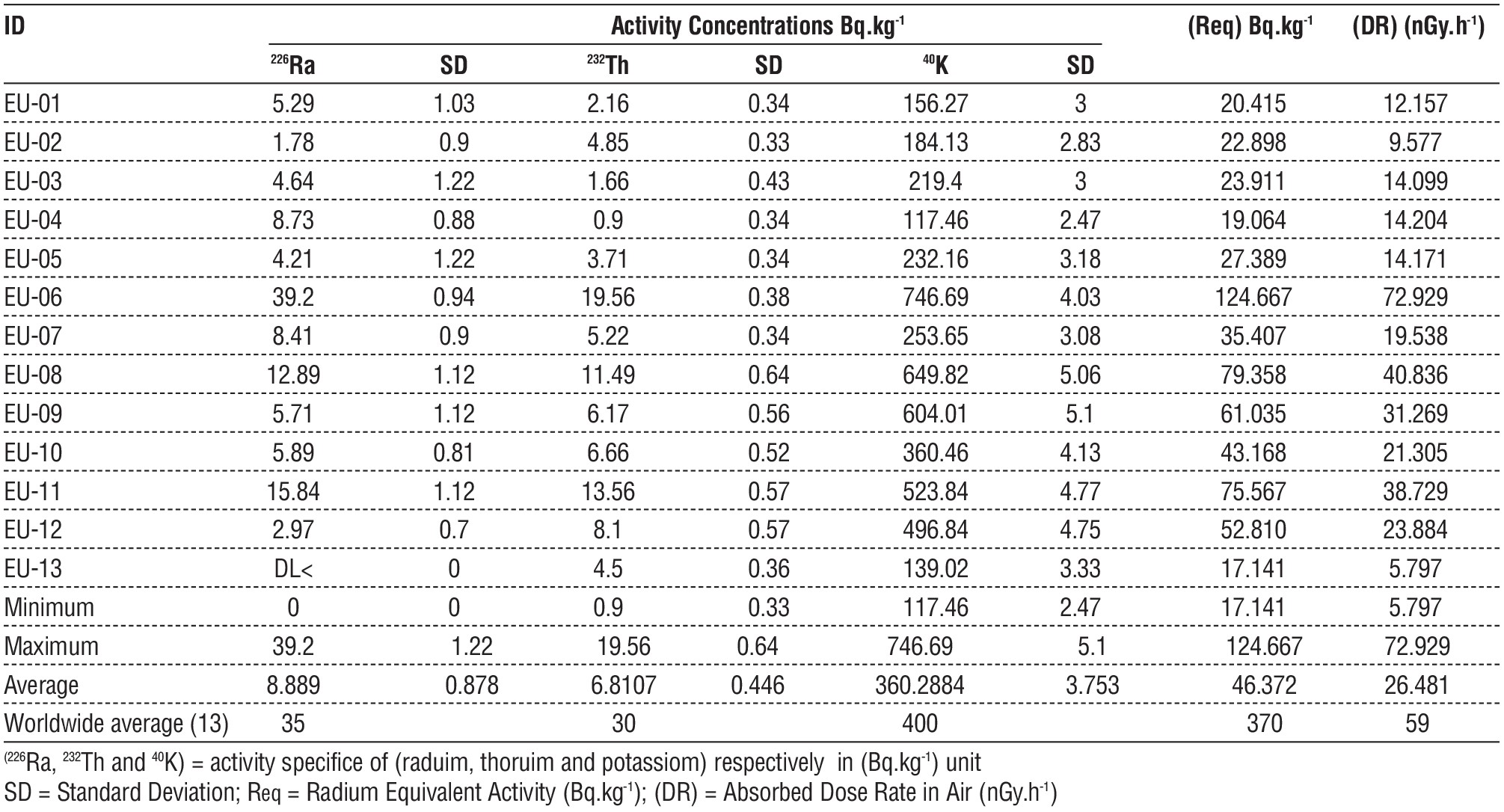
Figure 1 - The absorbed dose rate relationship with radium equivalent activity
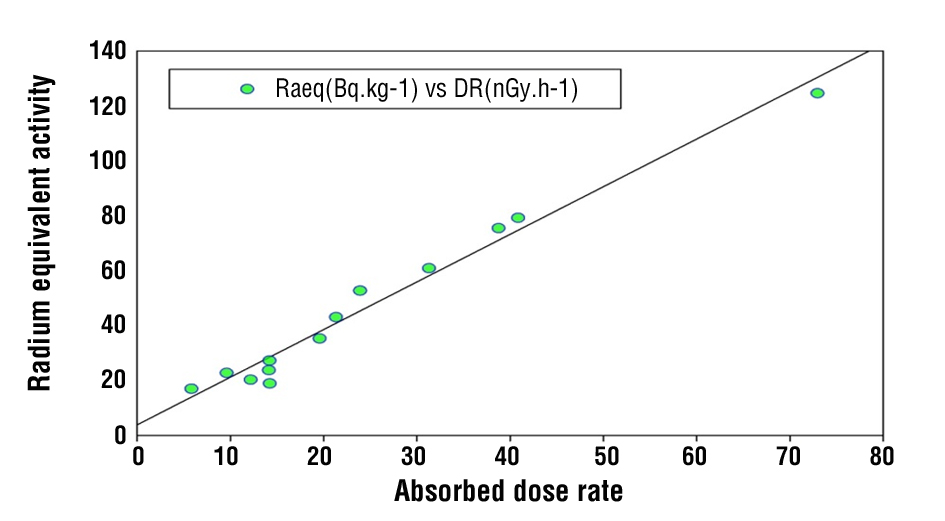
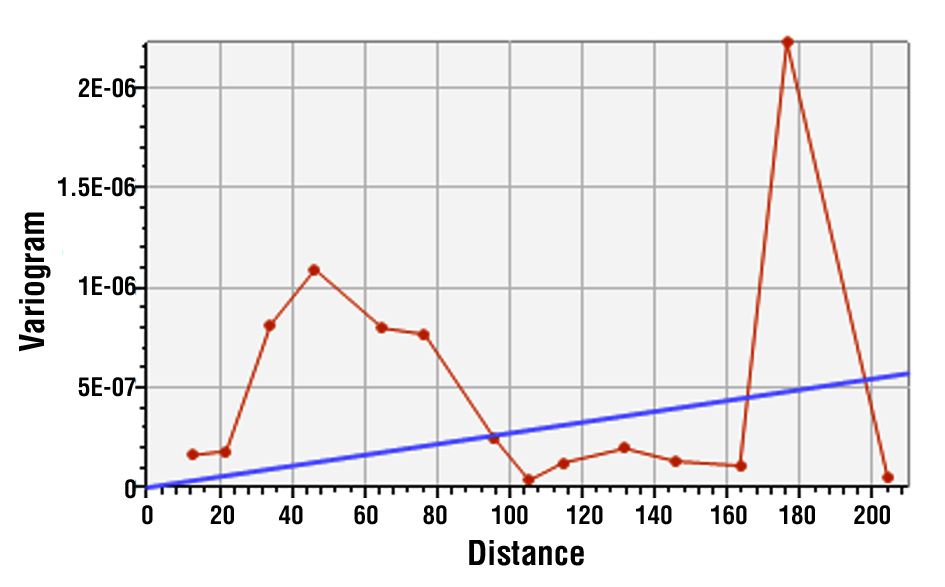
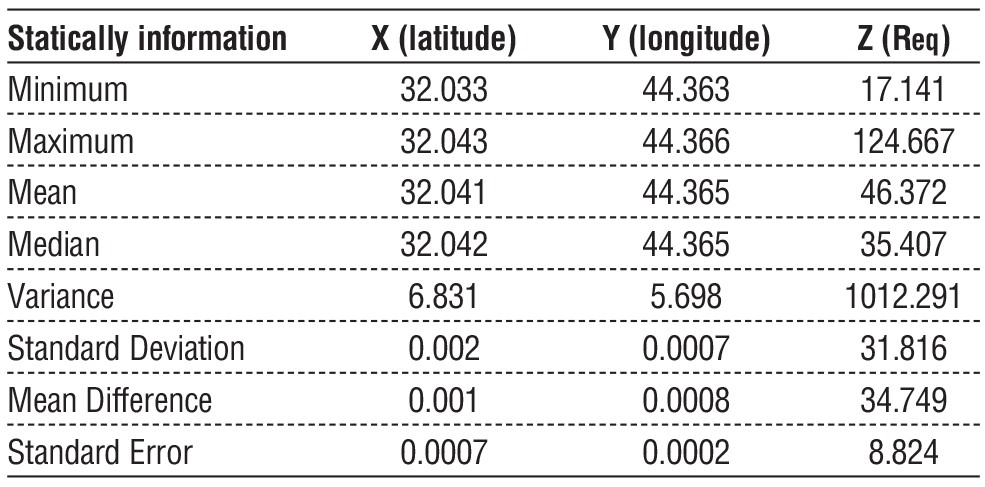
With an average of 46.72 Bq.kg-1, the soil's Raeq readings range from 17.141 to 124.667 Bq.kg-1. The predicted Raeq values fell below the 370 Bq.kg-1 global tolerable limit (28). The average outdoor absorbed dose rate was 26.481 nGy.h-1, with a range of 5.797 to 72.929 nGy.h-1. This value was determined to be less than the 59 nGy.h-1 globally accepted standard. Because of radium equivalent includes the effect of the three radio active nuclei studied, so we took into account its statistical relationship with the site coordinates of soil samples in the study as in fig. 1, area also the variation of data points in relation to distance it says that along this trend, data points that are close together show a low degree of variance while points that are farther away show a higher degree of variance, within a certain range, the differences between the points will become more or less constant as shown in
fig. 2, 3 and table 4 (22).
Figure 2 - Radioactive map of radium equivalent (Req)
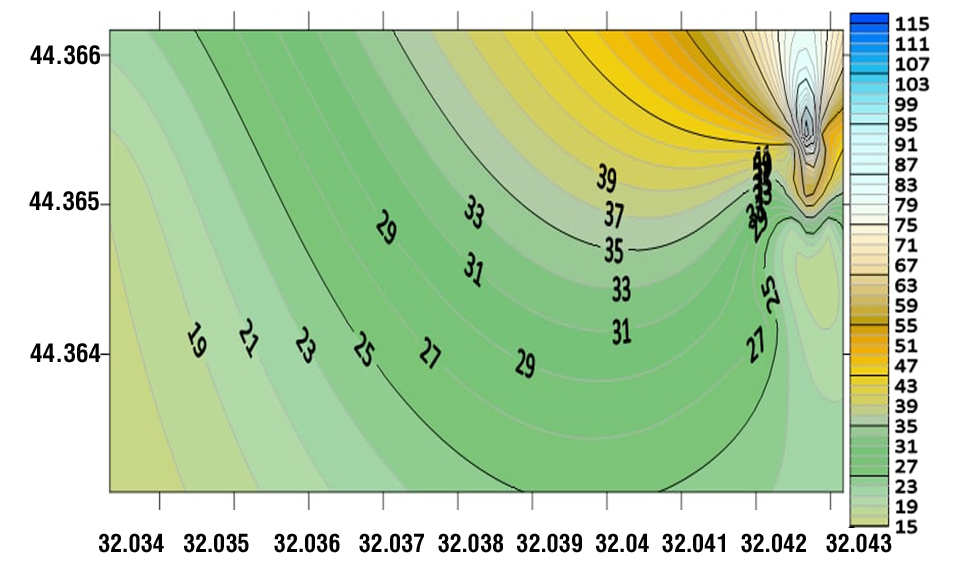
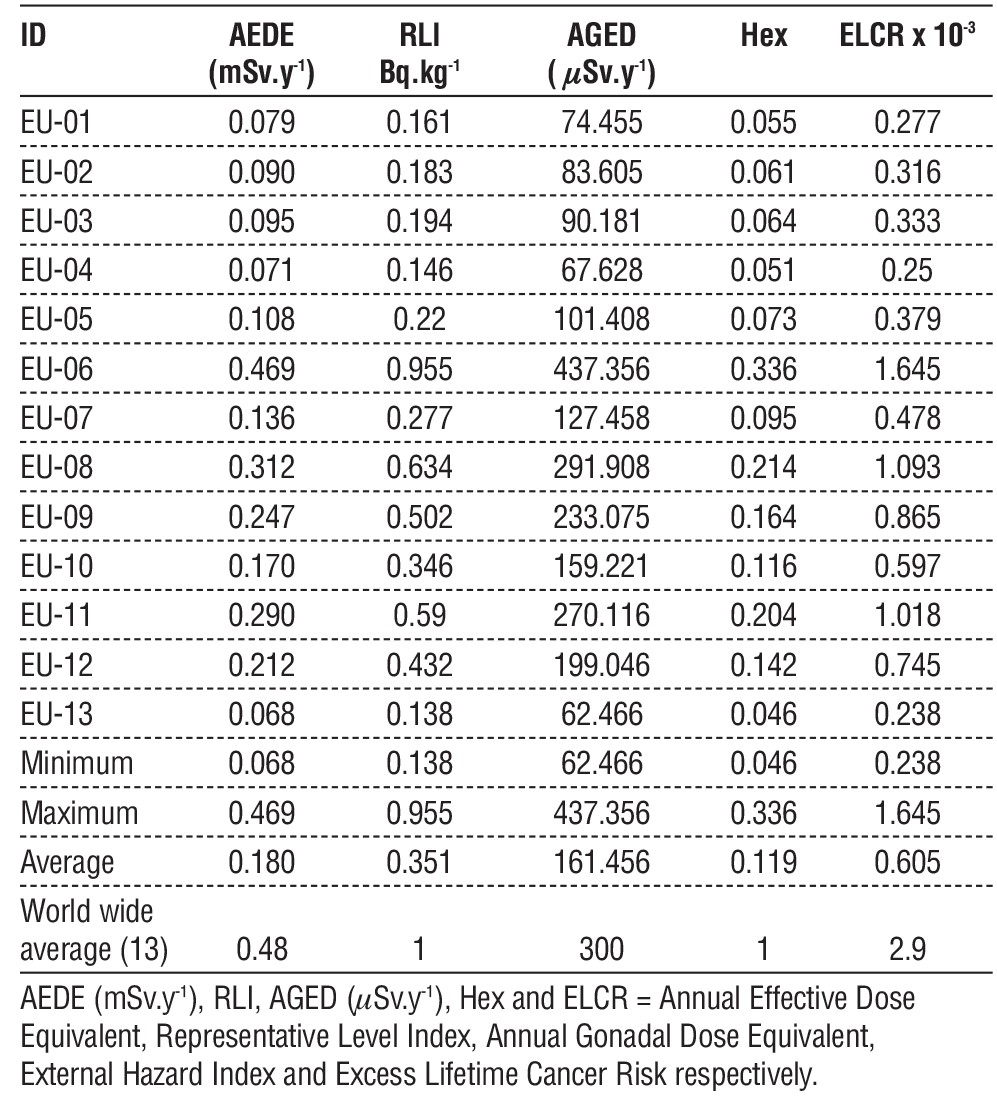
Table 3 displays the findings of the calculations for the soil samples' annual effective dose equivalent (AEDE), representative level index, annual gonadal dose equivalent (AGED), external hazard index (Hex), and excess lifetime cancer risk (ELCR). The average value of the AEDE, which ranges from 0.0681 to 0.469 mSv.y-1, was 0.180 mSv.y-1, which was less than the global average of 0.48 mSv (13).
Figure 3 - Variance between Req and locations of the studied soil samples
The average annual gonadal dose equivalent AGED value was 161.456 μSv.y-1, which was lower than the global average of 300 μSv.y-1. The values ranged from 62.466 to 437.356 μSv.y-1 (29).
However, the representative level index RLI was determined to be between 0.138 and 0.955, with an average value of 0.351. It is evident that the RLI values obtained in this investigation did not surpass the crucial value of unity (30).
With an average of 0.119 and a range of 0.046 to 0.336, the external hazard index Hex findings demonstrated that all of the values were below unity, the highest value allowed by UNSCEAR (26), indicating that the soil in the research region was safe for human habitation. With a mean of 0.605 x 10⁻³, the excess lifetime cancer risk ECLR varied between 0.238 x 10⁻³ and 1.645 x 10⁻³, which was below the world critical threshold of 2.9 x 10⁻³ (31), It was found that there the absorbed dose and the corresponding concentration have a linear relationship (Raeq) as in fig. 1.
Perhaps the reason for the fact that the values of the radiation parameters are very low compared to what is permitted globally is due to the continuous change in the building and floor of the building. Statistical parameters were also calculated for the effectiveness of the radium equivalent activity and a radiological map was drawn between latitude and longitude, and this variable shown in fig. 2 and we note the radioactive variation of the studied sites due to the different nature of the soil.
Table 3 - Annual effective dose equivalent, representative level index, the annual gonadal dose equivalent, external hazard index and excess lifetime cancer risk in soil samples
CONCLUSIONS
The potential health concerns associated with naturally existing radioactivity in soil samples were investigated using a gamma spectrophotometer. It was discovered that the particular activities of 226Ra, 232Th, 40K, and Raeq were less than the globally recognized values. It was discovered that the mean AEDE and AGED values were below the global critical values. The respondents in the study region did not exhibit any substantial radiological interest, as indicated by the mean values of the hex index and RLI, which were less than unity. The average lifetime cancer risk (ELCR) value was determined to be less than the 2.9 × 10⁻³ global average, indicating that normal radioactivity in the vicinity of the soil samples did not pose a health danger.
Table 4 - The statistical relationship of Req with the site coordinates of the studied soil samples
Acknowledgement
The Kufa University College of Science in Iraq is especially appreciated by the authors for assisting with the completion of this study.
Conflict of Interest
There are no disclosed conflicts of interest.
Funding
The Financial support by ourselves.
Ethical Approval
The local ethics committee gave its approval to the study protocol.
REFERENCES
1. Berejka A, Cleland M, Walo M. The evolution of and challenges for industrial radiation processing - 2012. Radiation Physics and Chemistry. 2014;94:141-6.
2. Hauf S, Kuster M, Batic M, Bell ZW, Hoffmann DH, Lang PM, et al. Radioactive decays in Geant4. IEEE Transactions on Nuclear Science. 2013;60(4):2966-83.
3. Karmaker N, Maraz KM, Islam F, Haque MM, Razzak M, Mollah M, et al. Fundamental characteristics and application of radiation. GSC Advanced Research and Reviews. 2021;7(1):064-72.
4. Vaiserman A, Koliada A, Zabuga O, Socol Y. Health impacts of low-dose ionizing radiation: current scientific debates and regulatory issues. Dose-Response. 2018;16(3):1559325818796331.
5. Gilbert ES. Ionising radiation and cancer risks: what have we learned from epidemiology? Int J Radiat Biol. 2009;85(6):467-82.
6. Christodouleas JP, Forrest RD, Ainsley CG, Tochner Z, Hahn SM, Glatstein E. Short-term and long-term health risks of nuclear-power-plant accidents. N Engl J Med. 2011;364(24):2334-41.
7. Clément G, Slenzka K. Fundamentals of space biology: research on cells, animals, and plants in space: Springer Science & Business Media; 2006.
8. Jaworowski Z. Radiation risk and ethics. Physics today. 1999;52(9): 24-9.
9. Hazou E, Patchali TE, Konzou E, Kola P, Zorko B, Ndontchueng Moyo M, et al. Radiological assessment and statistical approaches of natural radionuclides in soil samples related to phosphate ore activities in the site of Dagbati, southern region of Togo. Water, Air, & Soil Pollution. 2022;233(7):1-19.
10. Kadhim TM, Alkufi AA, Alhous SF, editors. Measurement of the natural radiological activity of soil samples of some general education schools in Al-Qadisiyah Governorate. IOP Conference Series: Materials Science and Engineering. IOP Publishing; 2020.
11. Alhous SF, Kadhim SA, Alkufi AA, Muhmood AA, Zgair IA, eds. Calculation of radioactivity levels for various soil samples of Karbala-Najaf road (Ya-Hussein)/Iraq. IOP Conference Series: Materials Science and Engineering; IOP Publishing; 2020.
12. Alhous SF, Alasadi LA, Kadhim SA. Calculation of radioactivity levels for various soil samples of Neighborhood Al Rahmah (IRAQ). Poll Res. 2021;40(1):53-57.
13. Aswood MS, Salih AA, Al Musawi MSA, editors. Long-lived gamma-ray measurement in soil samples collected from city central of Al-Diwaniyah, Iraq. Journal of Physics: Conference Series; IOP Publishing; 2019.
14. Onjefu SA, Taole SH, Kgabi NA, Grant C, Antoine J. Assessment of natural radionuclide distribution in shore sediment samples collected from the North Dune beach, Henties Bay, Namibia. Journal of radiation research and applied sciences. 2017;10(4):301-6.
15. Hamza ZM, Kadhim SA, Hussein HH. Assessment the Norms for Agricultural Soils in Ghammas town, Iraq. Plant Archives. 2019; 19(1):1483-90.
16. Hussain H, Hussain R, Yousef R, Shamkhi Q. Natural radioactivity of some local building materials in the middle Euphrates of Iraq. Journal of radioanalytical and nuclear chemistry. 2010;284(1):43-7.
17. Kadhim SA, Alhous SF, Abas HM, Hussein HH, editors. Comparison of alpha equivalent dose and equivalent annual reproductive dose in flour/Iraq. AIP Conference Proceedings; 2022: AIP Publishing LLC.
18. Forgo C, Oncescu M. Dose-rate conversion factors for external exposure to photon emitters from soil. Romanian Journal of Physics. 1994;39(7-8):627-30.
19. Salman AY, Kadhim SA, Alaboodi AS, Alhous SF, editors. Study the contamination of Radioactivity levels of 226Ra, 232Th and 40K
in (water) Iraq and their potential radiological risk to human population. IOP Conference Series: Materials Science and Engineering; 2020: IOP Publishing.
20. Deak PD, Smal Y, Kalender WA. Multisection CT protocols: sex-and age-specific conversion factors used to determine effective dose from dose-length product. Radiology. 2010;257(1):158-66.
21. Shanley C, Matthews K. A questionnaire study of radiography educator opinions about patient lead shielding during digital projection radiography. Radiography. 2018;24(4):328-33.
22. UNSCEAR. United Nations Scientific Committee on the Effects of Atomic Radiation (UNSCEAR). UNSCEAR Report Annex E Sources-to-Effects Assessment for Radon in Homes and Workplaces. 2009.
23. Chu E, Sartorelli A. Cancer chemotherapy. Lange’s Basic and Clinical Pharmacology. 2018:948-76.
24. Alkufi AA, Kadhim SA, Alhous SF, editors. Comparison of excess lifetime cancer risk for different age groups for selected flour samples. AIP Conference Proceedings; 2022: AIP Publishing LLC.
25. Senthilkumar R, Narayanaswamy R. Assessment of radiological hazards in the industrial effluent disposed soil with statistical analyses. Journal of Radiation Research and Applied Sciences. 2016;9(4):449-56.
26. Unscear S. Effects and risks of ionizing radiation. United Nations, New York. 1988:565-71.
27. Alhous SF, Kadhim SA, Alkufi AA, Kadhim BA, editors. Measuring the level of Radioactive contamination of selected samples of Sugar and Salt available in the local markets in Najaf governorate/Iraq. IOP Conference Series: Materials Science and Engineering; 2020: IOP Publishing.
28. Faweya E, Olowomofe G, Akande H, Faweya O, Adesakin G. Evaluation of radon exhalation rate and excessive lifetime cancer risk in Dumpsites in Ondo city Southwestern Nigeria. International Journal of Radiation Research. 2019;17(3):371-82.
29. Domenech H. Radiation safety. Management and Programs Cham: Springer. 2017.
30. Valentin J. Avoidance of radiation injuries from medical interventional procedures, ICRP Publication 85. Annals of the ICRP. 2000;30(2):7.
31. Tufail M. Enhancement of natural radioactivity in fertilized soil of Faisalabad, Pakistan. Environmental Science and Pollution Research. 2012;19(8):3327-38.
Full Text Sources:

Abstract:

Views: 4705


For Authors
Journal Subscriptions

Jun 2026
Supplements
Instructions for authors
Online submission
Contact
e-ISSN: 2601 - 1700 (online)
ISSN-L: 2559 - 723X
Journal Abbreviation: Surg. Gastroenterol. Oncol.
Surgery, Gastroenterology and Oncology (SGO) is indexed in:
- SCOPUS
- EBSCO
- DOI/Crossref
- Google Scholar
- SCImago
- Harvard Library
- Open Academic Journals Index (OAJI)
Surgery, Gastroenterology and Oncology (SGO) is an open-access, peer-reviewed online journal published by Celsius Publishing House. The journal allows readers to read, download, copy, distribute, print, search, or link to the full text of its articles.
Time to first editorial decision: 25 days
Rejection rate: 61%
CiteScore: 0.2
 IASGO Society News
Meetings and Courses in 2025
Meetings and Courses in 2024
Meetings and Courses in 2023
Meetings and Courses in 2022
Meetings and Courses in 2021
Meetings and Courses in 2020
Meetings and Courses in 2019
Verona expert meeting 2019

Surgery, Gastroenterology and Oncology applies the Creative Commons Attribution Non Commercial (CC BY-NC 4.0) license, which permits readers to copy and redistribute the material in any medium or format, remix, adapt, build upon the published works non-commercially, and license the derivative works on different terms, provided the original material is properly cited and the use is non-commercial. Please see: https://creativecommons.org/licenses/by-nc/4.0/
Publisher’s Note:
The opinions, statements, and data contained in article are solely those of the authors and not of Surgery, Gastroenterology and Oncology journal or the editors. Publisher and the editors disclaim responsibility for any damage resulting from any ideas, instructions, methods, or products referred to in the content.