Surgery, Gastroenterology and Oncology

|
|
Background: Resveratrol, a natural polyphenol with antioxidant and anti-inflammatory properties, has been suggested as a hepatoprotective agent. Diazinon is an organophosphorus insecticide that causes hepatocellular damage by causing oxidative stress and inflammation. Aim: This study investigates the protective effects of resveratrol against diazinon-induced liver toxicity in laboratory rats.
Methods: Five groups of thirty rats were created: (1) diazinon-only, (2–3) resveratrol pre-treatment at varying doses before diazinon, (4) vitamin C pre-treatment before diazinon, and (5) control (distilled water). Oral treatments were given for 30 days. Liver function biomarkers (ALT, AST), oxidative stress indicators (GPx), and inflammatory cytokines (IL-1b) were assessed alongside histopathological analysis.
Results: Diazinon exposure significantly elevated AST, ALT, IL-1b, and liver weight while lowering GPx actions and causing histopathological liver damage. Resveratrol pre-treatment effectively reduced these effects, evidenced by decreased enzyme levels, attenuated inflammation, enhanced antioxidant activity, and improved liver histology.
Conclusion: Resveratrol protects against diazinon-induced hepatotoxicity by reducing
oxidative stress, inflammation, and liver damage. Its therapeutic potential warrants further investigation for clinical applications against organophosphate-induced liver damage.
INTRODUCTION
The liver is a vital organ, responsible for various metabolic processes including detoxification, protein synthesis, and digestive biochemical production protein synthesis. It is vulnerable to hepatotoxicity, a serious health risk often induced by environmental toxins, pharmaceuticals, and pesticides (1). Diazinon (DZN), a widely used organophosphorus insecticide (O, O-diethyl-O-[6-methyl-2-(1-methylethyl)-4-pyrimidinyl] phosphorothioate), classified by the WHO as moderately hazardous (Class II), presents a significant threat (2). Exposure, primarily via inhalation or ingestion, leads to hepatic P450-mediated desulfuration of DZN into the highly toxic metabolite, diazoxon. This metabolite inhibits cholinesterase and carboxylesterase, with its primary toxic effect stemming from acetylcholinesterase (AChE) inhibition. AChE's responsibility in hydrolyzing acetylcholine at cholinergic synapses is crucial for appropriate nervous system function. DZN-induced AChE inhibition results in acetylcholine accumulation, overstimulating muscarinic and nicotinic receptors. This disruption of cholinergic neurotransmission is accompanied by an imbalance between free radical production and scavenging, leading to oxidative stress, and inflammation. Consequently, antioxidant enzymes and non-enzymes, including glutathione peroxidase (GPX) and mitochondrial enzymes, are depleted, while mitochondrial damage in liver tissues and serum levels of intracellular liver enzymes increase such as aspartate aminotransferase (AST) and alanine aminotransferase (ALT). Although the antioxidant system normally alleviates free radical damage through electron loss from singlet oxygen and other reactive species, DZN exposure overwhelms this protective mechanism, ultimately compromising hepatic function (3). Given the detrimental effects of such hepatotoxic agents, there is an increasing interest in natural antioxidants in foods high in non-enzymatic antioxidants including Vitamin C, and E, Carotenoids, Flavonoids, and polyphenols that can provide protective effects against liver damage (4). Resveratrol (3,5,4'-trihydroxy-trans-stilbene), is a polyphenolic phytoalexin compound created by a variety of plants in reaction to the invasion of bacteria or fungi. Found in various plants such as grapes, berries, and peanuts, has garnered attention for its broad spectrum of biological activities, including antioxidant, anti-inflammatory, and anti-aging properties. Among these, its hepatoprotective effects are of particular interest, as liver diseases are a major global health concern with limited effective treatments (5). Organophosphate pesticides (OPs) such as diazinon induce oxidative stress, inflammation, apoptosis, and mitochondrial dysfunction, which are central mechanisms in the pathogenesis of liver disorders. Resveratrol’s ability to modulate these pathways makes it a promising candidate for liver protection (6). Resveratrol exerts its hepatoprotective effects primarily through activating sirtuin 1 (SIRT1) and AMP-activated protein kinase (AMPK), crucial regulators of cellular metabolism and stress response. By enhancing SIRT1 activity, resveratrol promotes mitochondrial biogenesis, reduces oxidative damage, and inhibits inflammatory signaling pathways, including nuclear factor-kappa B (NF-?B). Activation of AMPK by resveratrol further supports energy balance and fatty acid oxidation, alleviating hepatic steatosis and improving liver function (7). Additionally, resveratrol’s antioxidant properties help neutralize reactive oxygen species (ROS) and enhance enzymatic antioxidant defenses such as glutathione peroxidase (GPx) and catalase (CAT), superoxide dismutase (SOD) and inhibiting lipid peroxidation. The compound also modulates key signaling pathways, including the mammalian target of rapamycin (mTOR) and Nuclear Factor Erythroid 2–Related Factor 2 (Nrf2), enhancing autophagy and fortifying cellular defenses against toxic insults. Its ability to regulate apoptotic markers, restore liver function enzyme levels (AST, ALT), and improve histopathological outcomes further supports its therapeutic potential (8).
Hepatotoxicity is a health risk caused by environmental toxins, pharmaceuticals, and pesticides. Diazinon, an insecticide, disrupts cholinergic neurotransmission, leading to oxidative stress and inflammation, and impairs liver function, elevating liver enzyme levels of ALT, and AST. Resveratrol, a natural polyphenolic compound, offers a promising avenue for mitigating diazinon-induced liver damage due to its potent antioxidant, anti-inflammatory, and hepatoprotective properties. By modulating key signaling pathways, including SIRT1, AMPK, Nrf2, and mTOR, resveratrol can counteract the detrimental effects of diazinon, promoting mitochondrial biogenesis, restoring liver function, and protecting against oxidative stress and inflammation. This study aims to investigate the protective effects of resveratrol against diazinon-induced hepatotoxicity. Understanding its mechanisms in counteracting DZN-induced hepatotoxicity could provide useful observations for developing effective therapeutic strategies.
Materials and Methods
Experimental Animals
The experiment involved 30 adult male albino rats (weighted average 250- 350 gm), aged (2-3 months). The animals were obtained from Iraq's Baghdad breeding research. At the University of Basra's College of Pharmacy. The rats were placed in plastic boxes with wood shavings and provided with water and food. They were kept in suitable conditions, with temperature and humidity maintained at 25 ± 3 degrees Celsius. Four rats were placed in each box. The rats were exposed to 12 hours of regular light and 12 hours of darkness. After two weeks, the rats' weights were recorded before administering any treatment and beginning the experiment. The Ethical Committee (EC 41) at 10\2023 of the University of Basra approved all methods.
The materials and chemicals used in these experiments were Diazinon 10% EC liquid was acquired from Endimaj for the specialized chemical and pharmaceutical industry.CO., Jordan. Resveratrol powder was procured from Xi an LY Health Technology Co., Ltd. China. Vitamin C tablet 1000 mg from Nutritionl L.L.C., USA. Formaldehyde from Loba Chemie PVT. LTD. India. Chloroform from Thomas Baker.
Experiment Design and Animal Treatment Protocol
Five groups of rats were randomly selected, with six rats in each group.
Group 1: Diazinon-induced toxicity animals were administered 20 mg/kg Diazinon with an equal amount of vehicle (distilled water).
Group 2: 20 mg/kg resveratrol was administered concomitantly before delivery of 20 mg/kg Diazinon.
Group 3:10 mg/kg resveratrol was administered concomitantly before 20 mg/kg Diazinon was delivered.
Group 4: 100 mg/kg vitamin C was administered before 20 mg/kg Diazinon.
Group 5 (control): administered distilled water (D.W.) equivalent volume to the volumes of the agents delivered to the other groups.
After a 30-day diazinon and treatment period, rats starved overnight. The following day (31 days), their weights were recorded after the experiment's completion.
To euthanize the animals, the rats were anesthetized by putting them in a closed container with a piece of cotton saturated with an anesthetic agent (chloroform). Once anesthesia was confirmed, the rats were taken out from the container, their chests were opened, and the liver and blood were extracted for examination.
Evaluation of Body Weight and Organs
All animals' weights were recorded before and after the therapy and diazinon was administered, and they were weekly during the trial. The relative weight of livers was calculated using the equation (organ weight/animal weight) *100.
Blood Sampling Preparation
After opening the rats' chests, blood was extracted from the heart's vena cava, put in tubes for biochemical analysis, centrifuged at 3000 rpm for 15 minutes, and the clear supernatant layer was separated.
Tissue Sampling Preparation (homogenate)
The 4 rat's livers were extracted from each group, washed with phosphate-buffered saline (PBS PH 7.4), and then dried with filter paper before measuring the weight of each liver. Then ground into small pieces by adding PBS in a 1:9 ratio. By using a glass homogenizer. The tissues were then centrifuged at 5000 rpm for 5 minutes to collect the supernatant in Eppendorf tubes, and stored at -20 C for biochemical tests.
Histopathological Preparation
The two rat's livers were extracted from each group for histopathological evaluation by washing them with phosphate-buffered saline (PBS), drying them, measuring their weight, placing them in a 10% neutral buffered formalin solution, and stored at room temperature for 3 to 5 days for histopathological examination.
Biochemical Analysis
Evaluation hepatic enzymes
The research assessment serum liver enzymes AST and ALT levels were measured in all groups, including the control group, using a spectrophotometric method (Abbott ARCHITECT c4000 clinical chemistry analyzer) of serum from tubes used (Blood Sampling preparation).
Evaluation of Tissue Glutathione Peroxidase Levels
GPX was measured as an antioxidant parameter in liver tissue in all groups, by using a previously prepared sample (homogenate), using the Rat Glutathione Peroxidase ELISA Kit.
Evaluation of Tissue Interleukin 1 B Level
The inflammatory marker IL1B was measured in liver tissue in all groups, by using a previously prepared sample (homogenate) using the Rat Interleukin1 B ELISA Kit.
Histopathological Evaluation
Histopathological analysis of liver tissues, by using a previously prepared sample (Histopathological preparation sample) involves dehydration, clearing, and embedding in paraffin wax. Thin slices are cut from the embedded tissue block, stained with hematoxylin and eosin (H&E), and examined under a light microscope at 10x and 40x magnification to study tissue structure.
Statistical Analysis
The standard error of the mean (SEM) and the mean value for each group were used to display the study's findings. One-way ANOVA and Tukey post hoc test were used in the statistical analysis to decide significant differences between the treated and the control groups. A p-value of 0.05 was used as the threshold for statistical significance if a p-value (?0.05) was considered statistically significant, and the analysis was carried out using Graph Pad Prism software, version 10.2.3 (403).
Results
Effect of Treatments on Relative Liver Weight
All treatment groups exhibited statistically significant differences in relative liver weight. The Diazinon group showed a slight increase compared to the control group (D.W.), this difference was also statistically significant. Both resveratrol groups demonstrated a lower relative liver weight than the Diazinon group, with these differences statistically significant. These findings suggest a potential dose-dependent effect of resveratrol on liver size reduction (fig. 1).
Figure 1 - Comparison of mean ± SEM relative liver weight among the different experimental groups, showing the effect of Resveratrol and vitamin C after Diazinon administration.
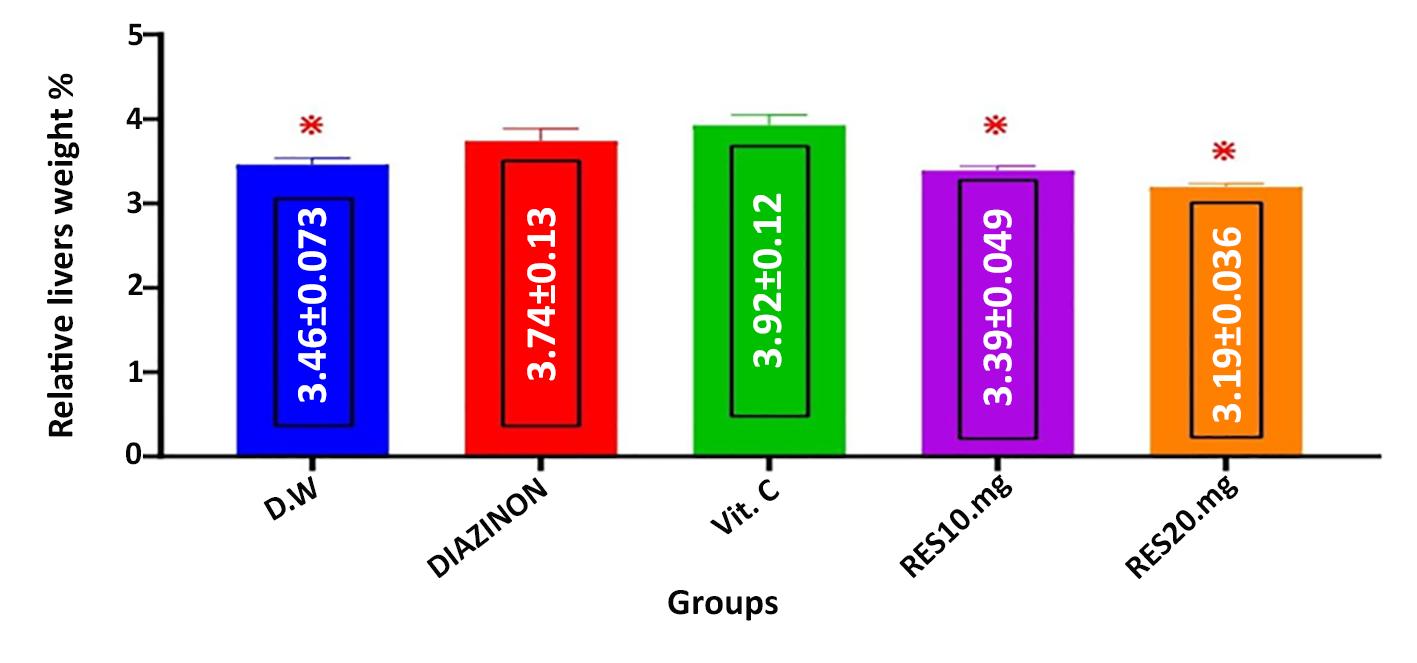
* Represent significant difference between groups p < 0.05; D.W: Distill water group (negative control group); Diazinon: inducer group (positive control group); Vit. C: Vitamin C group (comparison group); RES.10mg: Resveratrol 10 mg group (treatment group 1); RES.20mg: Resveratrol 20 mg group (treatment group 2)
Hepatic Effect
Effect of treatments on serum AST levels
Aspartate aminotransferase (AST) is a liver enzyme whose elevated blood levels typically signal liver damage. This study has statistically significant differences between all groups. Rats exposed to Diazinon exhibited significantly higher AST levels compared to the control group. Conversely, the vitamin C group showed a non-significant increase in AST compared to the Diazinon group. Both Resveratrol groups significantly decreased AST levels relative to the Diazinon group. While the higher Resveratrol dose of 20 mg appeared more effective than the low dose of 10 mg, this difference was not statistically significant (p-value = 0.695). This suggests a potential dose-response relationship (fig. 2).
Figure 2 - Comparison of mean ± SEM AST. Levels among the different g experimental groups showing the effect of Resveratrol and vitamin C after Diazinon administration.
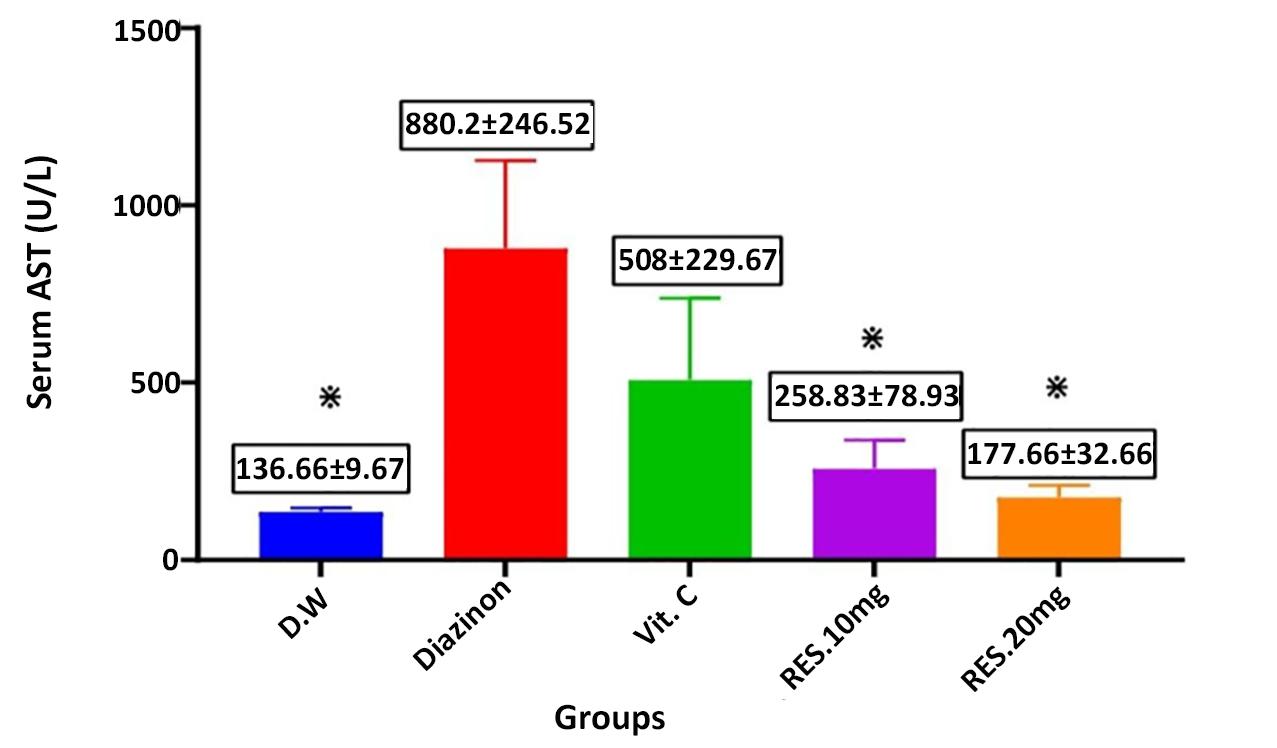
* Represent significant difference between groups p < 0.05
Effect of treatments on ALT serum levels
ALT (alanine transaminase) is a liver enzyme. Elevated levels in the blood often indicate liver damage. This study found statistically significant differences between groups. The Diazinon group exhibited significantly higher ALT levels compared to the control group. The group treated with Vitamin C showed no significantly lower ALT levels than the Diazinon group. There appeared to be a dose-dependent effect of Resveratrol, with both doses significantly reducing ALT levels compared to the Diazinon group. The 20mg dose tended to exhibit no significantly a slightly greater reduction in ALT levels than the 10mg dose. Notably, there were no significant differences in ALT levels between the control group and the 20 mg Resveratrol group (p=0.998) (fig. 3).
Figure 3 - Comparison of mean ± SEM ALT. Levels among the different g experimental groups showing the effect of Resveratrol and vitamin C after Diazinon administration.
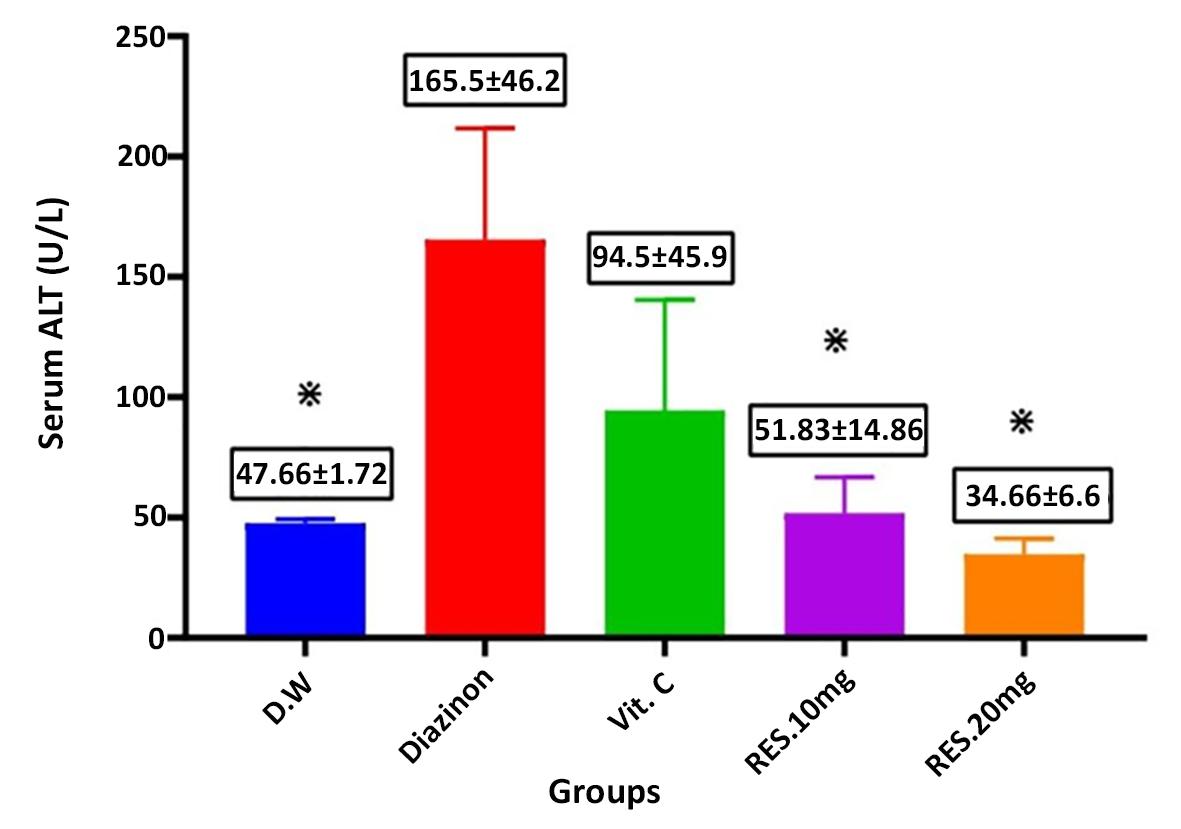
* Represent significant difference between groups p < 0.05
Effect of treatments on hepatic tissue glutathione peroxidase levels
Glutathione peroxidase (GPx), a critical antioxidant enzyme safeguarding cells from oxidative damage, exhibited no significant differences in levels across treatment groups. Neither diazinon nor vitamin C treatments significantly altered GPx levels compared to the control. While vitamin C appeared to elevate GPx levels relative to diazinon, this effect was not statistically significant. Both doses of Resveratrol did not significantly increase GPx levels compared to the diazinon group (fig. 4).
Figure 4 - Comparison of mean ± SEM Hepatic tissue glutathione peroxidase levels among the different g experimental groups showing the effect of Resveratrol and vitamin C after Diazinon administration.
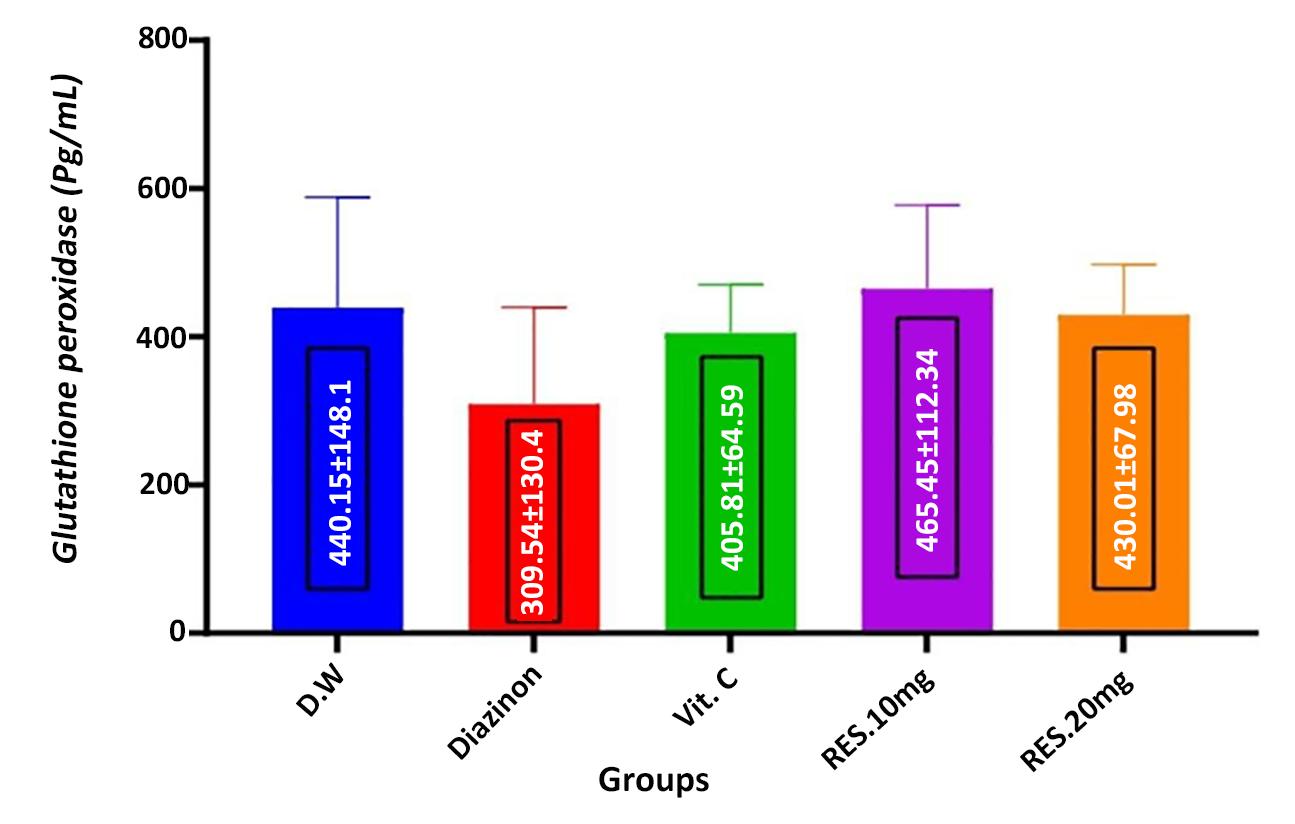
* Represent significant difference between groups p < 0.05
Effect of treatments on hepatic tissue IL1B levels
IL1B (Interleukin-1 beta) is a pro-inflammatory cytokine involved in various immune responses and inflammatory processes. Elevated levels of IL1B are often associated with tissue damage and inflammation. The relationship between all groups in the experiment is statistically significant. Compared to the control group, Diazinon significantly increased IL1B levels. Vitamin C significantly decreased IL1B levels compared to the Diazinon group. Both doses of Resveratrol significantly reduced IL1B levels compared to the Diazinon group. The resveratrol 20mg dose demonstrated a dose-dependent reduction in IL1B levels which appeared to be slightly more effective in reducing IL1B levels than the 10mg dose, although this difference not be statistically significant (p=0.510). Importantly, there were no significant differences in IL-1? levels between the control group and the 20mg Resveratrol group (p=0.961) (fig. 5).
Figure 5 - Comparison of mean ± SEM Hepatic tissue IL1B levels among the different g
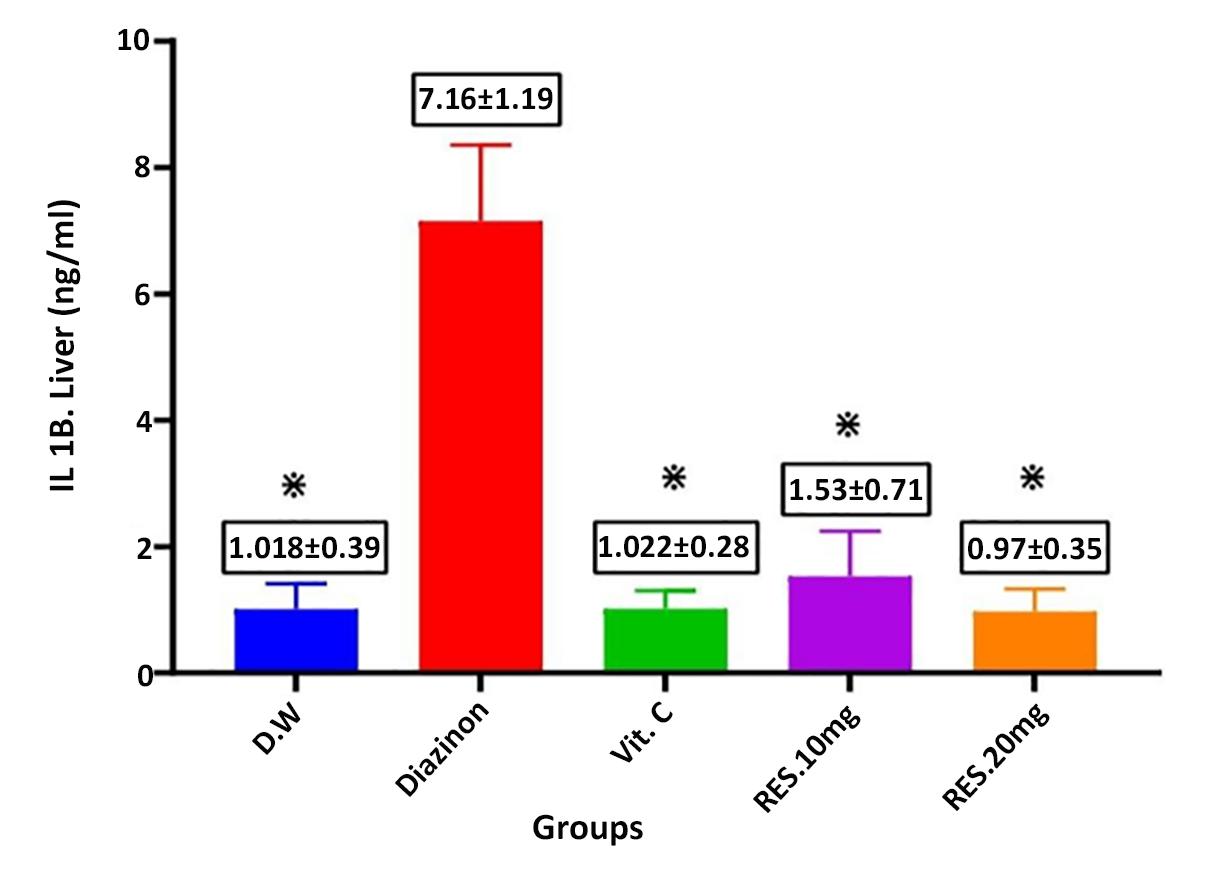
experimental groups showing the effect of Resveratrol and vitamin C after Diazinon
administration.
* Represent significant difference between groups p < 0.05
Effect of Treatments on Hepatic Histopathology
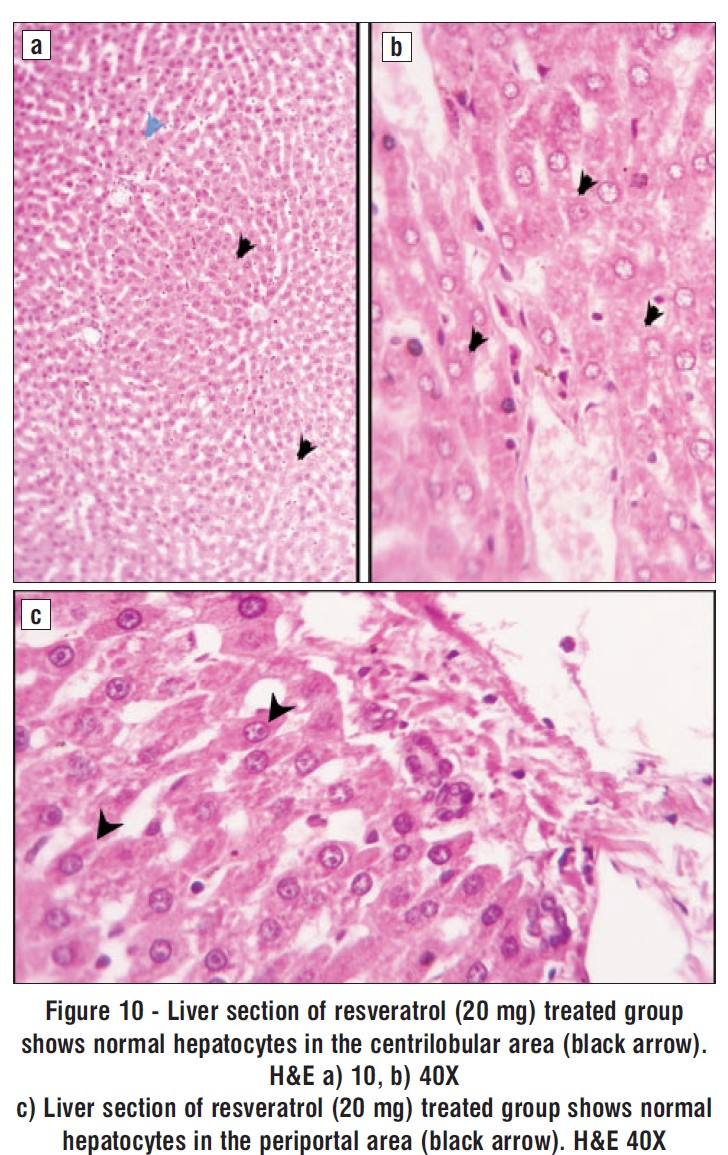
The liver histology of the Control Group displayed typical architecture, with central veins and hepatocytes organized in a lattice-like arrangement. The cytoplasm of the cells was dark-staining and had a single nucleus (fig. 6). Diazinon group hepatocytes exhibited severe vacuolar degeneration in the centrilobular and peri-portal regions (fig. 7). Treatment groups compared to the diazinon group, treatment groups demonstrated varying degrees of hepatocellular protection. Vitamin C exhibited less protection, with approximately 40% of hepatocytes displaying vacuolation at 40x magnification and enlarged and other normal hepatocytes (fig. 8). Resveratrol (10 mg) shows a higher degree of improvement where there were normal hepatocytes in the centrilobular and mild vacuolation in the periportal area, (fig. 9). Resveratrol (20 mg) was the most effective, with normal hepatocytes observed in both centrilobular and periportal areas (fig. 10).
Figures 6-9 - Liver section of control group shows normal hepatocytes in both periportal area (black arrow) and centrilobular area (green arrow), normal central vein (blue arrow), normal portal vein, hepatic artery and bile duct in the porta area (red arrow) and normal sinusoids (yellow arrow). H&E a) 10X, b) 40X
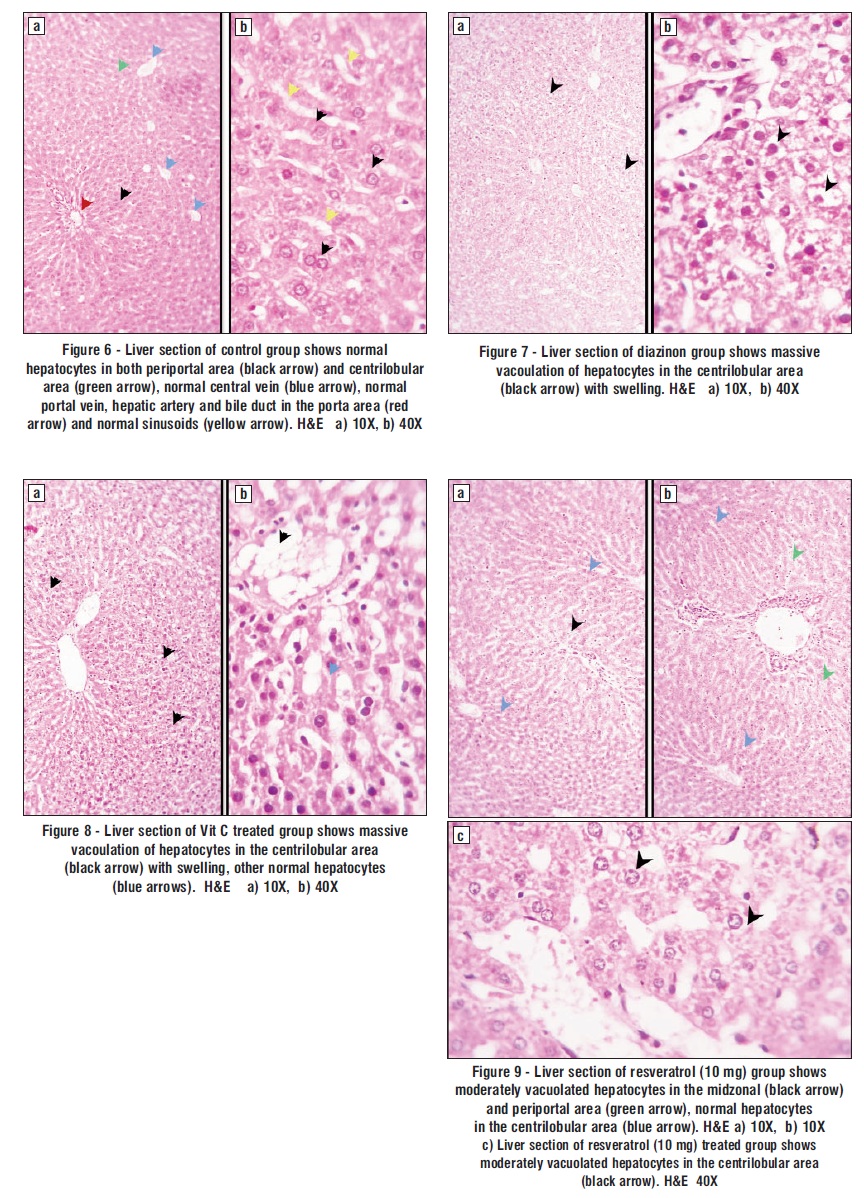
Figure 10
Discussion
Liver toxicity caused by organophosphorus pesticides such as Diazinon is a significant concern due to its ability to induce oxidative stress, inflammation, and hepatocellular damage. The current study investigated the hepatoprotective effect of resveratrol against Diazinon-induced hepatotoxicity in laboratory rats. Thirty rats were divided into five groups each containing six rats—the first group receiving only diazinon. The second and third groups were pre-treated with different doses of resveratrol before diazinon administration. The fourth group received vitamin C prior to diazinon administration. The fifth group received only distilled water. All treatments were orally administered daily for 30 days. The rats' vital signs and body weights were monitored throughout the experimental period. Our findings demonstrate that diazinon induces hepatotoxicity, evidenced by raised levels of the liver enzymes alanine aminotransferase (ALT) and aspartate aminotransferase (AST), increased levels of the inflammatory marker interleukin-1? (IL-1?), and decreased levels of the antioxidant enzyme glutathione peroxidase (GPX). These biochemical changes were accompanied by pathological alterations in liver histology. Administration of Vitamin C and resveratrol effectively mitigated diazinon-induced liver damage, as shown by improvements in several key biochemical and histopathological examinations.
Resveratrol is a naturally occurring polyphenol compound present in grapes and other plants like berries, and peanuts. It acts as an antioxidant, protecting cells from damage caused by free radicals. It also has anti-inflammatory, anti-cancer, and anti-aging properties. Has been investigated for its potential to prevent liver damage from diazinon (6). In this in vitro study, Resveratrol appeared to provide superior hepato-protective effects compared to vitamin C. Treatment with resveratrol resulted in a statistically significant reduction in liver weight, AST, and ALT levels. Additionally, resveratrol more significantly reduced IL1B levels and resulted in greater improved histopathological changes in the liver tissue compared to vitamin C. These findings suggest that resveratrol may exert its hepatoprotective effects through several potential mechanisms.
AST and ALT are key biomarkers of liver injury, these enzymes are normally present in the liver cells involved in amino acid metabolism and released into the bloodstream upon hepatocyte damage and membrane leakage (9). Our results showed that rats exposed to diazinon exhibited elevated levels of ALT and AST, indicating compromised liver function and hepatocellular damage. DZN's inhibition of acetylcholinesterase (AChE) increases sympathetic nervous system activity and indirectly causes hepatic stress, and induction of oxidative stress (OS) leads to the generation of free radicals such as reactive oxygen species (ROS) contributes to damage cellular lipids, proteins, and DNA, leading to lipid peroxidation, nitric oxide reaction, and mitochondrial damage, which in turn affects the membrane permeability and allows the enzymes to leak into circulation. The observed increase in ALT and AST activity in the diazinon-treated group is consistent with previous studies (10,11). However, the co-administration of resveratrol significantly reduced the levels of both ALT and AST, suggesting a protective effect against diazinon-induced liver damage. Resveratrol acts as an antioxidant by scavenging free radicals, reducing oxidative stress, and decreasing reactive oxygen species (ROS). It helps to stabilize cellular membranes by reducing lipid peroxidation and protects DNA and mitochondria by reducing oxidative stress and enhancing mitochondrial antioxidant defense. Resveratrol helps prevent cellular damage in hepatocytes, which minimizes the release of ALT and AST into the bloodstream (12-14).
Inflammation plays an important role in the pathogenesis of toxicant-induced liver injury. Interleukin-1? (IL-1?), a pro-inflammatory cytokine, is a key mediator of this process (15). The increase in IL-1? levels in the Diazinon-only group indicates that pesticide exposure triggers an inflammatory response, contributing to hepatotoxicity. ROS generation activates nuclear factor kappa B (NF-?B), a transcription factor involved in inflammatory cytokine expression. ROS also stimulates the NLRP3 inflammasome, a multiprotein complex that activates caspase-1 which is necessary for the cleavage and activation of IL-1?. This leads to the activation of MAPKs (mitogen-activated protein kinases) and JAK/STAT (Janus kinase/signal transducers and activators of transcription) pathways. This leads to the expression of pro-inflammatory genes, enhancing the immune response and tissue damage (16,17). Resveratrol treatment significantly attenuated the elevation of IL-1?, through its anti-inflammatory and antioxidant mechanisms by inhibiting the NF-?B pathway. It also downregulates the NLRP3 inflammasome, preventing caspase-1 activation. Resveratrol inhibits MAPK signaling pathways, such as p38 and c-Jun N-terminal Kinase (JNK), that regulate IL-1?, and modulate the gut-liver axis by enhancing gut barrier integrity and decreasing endotoxin translocation, indirectly reducing hepatic inflammation and IL-1? production via the Toll-Like Receptor 4 (TLR4)/NF-?B pathway. By these mechanisms, resveratrol down-regulates IL-1?, contributing to its hepatoprotective and anti-inflammatory properties (18-20).
Oxidative stress is another major contributor to diazinon-induced liver damage. Diazinon exposure can lead to the generation of reactive oxygen species (ROS), which can overwhelm the antioxidant defense mechanisms of the liver and damage cellular structures. Glutathione peroxidase (GPx) is a crucial antioxidant enzyme vital in detoxifying ROS and preventing oxidative damage, by converting it to water using reduced glutathione (GSH) as a substrate (21). Our results showed a decrease in GPx activity in the diazinon-treated group, indicating a depletion of antioxidant defenses, DZN depletes GSH levels due to increased utilization in neutralizing excessive ROS. DZN also disrupts the GSH/GSSG (glutathione disulfide) ratio, impairing GPx function (22,23). The ability of resveratrol to boost glutathione peroxidase activity highlights its potential to counteract Diazinon-induced oxidative stress and protect liver cells from apoptosis and necrosis. It activates Nuclear Factor Erythroid 2–Related Factor 2 (Nrf2), which enhances the expression of antioxidant enzymes, including GPx. Resveratrol also enhances intracellular glutathione (GSH) levels by stimulating GSH synthesis through Nrf2-mediated upregulation of glutamate-cysteine ligase (GCL) and maintaining GSH in its reduced form by increasing glutathione reductase activity. Additionally, Resveratrol reduces reactive oxygen species (ROS) by directly scavenging free radicals and upregulating other anti-oxidant enzymes like superoxide dismutase (SOD) and catalase (CAT), which stabilizes GPx activity and prevents oxidative inactivation (24-26).
Revealed Histopathological examination corroborated the biochemical findings. In the Diazinon-only group consistent with previous studies (27,28), liver tissue damage, hepatocytes show massive vacuolar degeneration in both the centrilobular and periportal areas, correlated with the observed increase in liver weight, suggesting that pesticide-induced liver injury leads to edema and inflammatory cell infiltration. The resveratrol-treated group demonstrated positive results, the hepatocytes were normal in both the centrilobular and periportal areas, concomitant The significant reduction in liver weight indicates that resveratrol mitigates these pathological changes. This reduction may result from decreased hepatocyte swelling, reduced lipid peroxidation, and inhibition of inflammatory cell infiltration, further supporting its hepatoprotective effects, conforming to earlier research (29-31).
Conclusion
The results of this study provide evidence for the hepatoprotective potential of resveratrol against diazinon-induced toxicity in rats. Resveratrol demonstrated its protective effects by reducing liver enzyme levels (AST, ALT), attenuating inflammation (IL-1?), enhancing antioxidant defenses (GPX), potentially influencing liver weight, and improving histopathological changes. These findings suggest that resveratrol's antioxidant and anti-inflammatory properties may be a promising therapeutic agent for mitigating organophosphate insecticide-induced liver damage. Further studies are warranted to explore resveratrol's precise mechanisms of action and to evaluate its potential therapeutic applications in clinical settings. Future research could also investigate the optimal dosage and duration of resveratrol treatment to maximize its hepatoprotective benefits.
Author’s Contributions
Afrah Talib Saddam, Conceptualization; Data Curation; Investigation; Methodology; Project administration; Resources; Software; Visualization; Writing – original draft and Writing – review & editing . Ahmed H. Al-Darraji, Conceptualization; Data Curation; Investigation; Methodology; Supervision; Validation; Visualization; Writing – original draft and Writing – review & editing.
Conflicts of Interest
The authors declare no conflict of interest regarding this article.
Funding: none.
References
1. Barouki R, Samson M, Blanc EB, Colombo M, Zucman-Rossi J, Lazaridis KN, et al. The exposome and liver disease - how environmental factors affect liver health. J Hepatol. 2023;79(2):492–505.
2. Ezzi L, Haouas Z, Salah IB, Sakly A, Grissa I, Chakroun S, et al. Toxicopathic changes and genotoxic effects in the liver of rat following exposure to diazinon. Environ Sci Pollut Res. 2016;23: 11163–70.
3. Abdel-Diam MM, Samak DH, El-Sayed YS, Aleya L, Alarifi S, Alkahtani S. Curcumin and quercetin synergistically attenuate sub-acute diazinon-induced inflammation and oxidative neurohepatic damage, and acetylcholinesterase inhibition in albino rats. Environ Sci Pollut Res. 2019;26:3659–65.
4. Singh D, Cho WC, Upadhyay G. Drug-Induced Liver Toxicity and Prevention by Herbal Antioxidants: An Overview. Front. Physiol. 2016;6:363.
5. Koushki M, Amiri-Dashatan N, Ahmadi N, Abbaszadeh HA, Rezaei-Tavirani M. Resveratrol: A miraculous natural compound for diseases treatment. Food Sci Nutr. 2018;6(8):2473–90.
6. Mehri F, Goodarzi MT, Esfahani M. The possible protective effect of resveratrol on diazinon-induced oxidative stress and hepatic injury. Avicenna J Med Biochem. 2020;8(1):44–8.
7. Izzo C, Annunziata M, Melara G, Sciorio R, Dallio M, Masarone M, et al. The role of resveratrol in liver disease: A comprehensive review from in vitro to clinical trials. Nutrients. 2021;13(3):1–23.
8. Gezer A, Ustundag H, Mendel AS, Bedir G, Duysak L. Hepatoprotective effects of resveratrol on ?-amanitin-induced liver toxicity in rats. Toxicon. 2024;247:107855.
9. Huang XJ, Choi YK, Im HS, Yarimaga O, Yoon E, Kim HS. Aspartate aminotransferase (AST/GOT) and alanine aminotransferase (ALT/GPT) detection techniques. Sensors. 2006;6(7):756–82.
10. Yusuf C. New Message! Work It Daily. 2020. p. 1–16.
11. Kalender S, Ogutcu A, Uzunhisarcikli M, Açikgoz F, Durak D, Ulusoy Y, et al. Diazinon-induced hepatotoxicity and protective effect of vitamin E on some biochemical indices and ultrastructural changes. Toxicology. 2005;211(3):197-206.
12. Ara C, Kirimlioglu H, Karabulut AB, Coban S, Ay S, Harputluoglu M, et al. Protective effect of resveratrol against oxidative stress in cholestasis. J Surg Res. 2005;127(2):112–7.
13. Jafari N, Shahsanai A, Memarzadeh M, Loghmani A. Prevention of communicable diseases after disaster: A review. J Res Med Sci 2011;16(7):956-962.
14. Jalili C, Farzaei MH, Roshankhah S, Salahshoor MR. Resveratrol attenuates malathion-induced liver damage by reducing oxidative stress. J Lab Physicians. 2019;11(03):212–9.
15. Mannaa FA, Abdel-Wahhab KG. Physiological potential of cytokines and liver damage. Hepatoma Res. 2016;2(6):131.
16. Abdelhamid FM, Elshopakey GE, Aziza AE. Ameliorative effects of dietary Chlorella vulgaris and ?-glucan against diazinon-induced toxicity in Nile tilapia (Oreochromis niloticus). Fish Shellfish Immunol. 2020;96:213–22.
17. El Okle OS, Tohamy HG, Althobaiti SA, Soliman MM, Ghamry HI, Farrag F, et al. Ornipural® mitigates malathion-induced hepato-renal damage in rats via amelioration of oxidative stress biomarkers, restoration of antioxidant activity, and attenuation of inflammatory response. Antioxidants (Basel). 2022;11(4):757.
18. He X, Li Y, Deng X, Xiao X, Zeng J. Integrative evidence construction for resveratrol treatment of nonalcoholic fatty liver disease: pre-clinical and clinical meta-analyses. Front. Pharmacol. 2023; 14:1230783.
19. Huang Y, Lang H, Chen K, Zhang Y, Gao Y, Ran L, et al. Resveratrol protects against nonalcoholic fatty liver disease by improving lipid metabolism and redox homeostasis via the PPAR? pathway. Appl Physiol Nutr Metab. 2020;45(3):227-239.
20. Jia R, Li Y, Cao L, Du J, Zheng T, Qian H, et al. Antioxidative, anti-inflammatory, and hepatoprotective effects of resveratrol on oxidative stress-induced liver damage in tilapia (Oreochromis niloticus). Comp Biochem Physiol Part - C. Toxicol Pharmacol. 2019; 215(October 2018):56–66.
21. Lubos E, Loscalzo J, Handy DE. Glutathione peroxidase-1 in health and disease: From molecular mechanisms to therapeutic opportunities. Antioxidants Redox Signal. 2011;15(7):1957–97.
22. Nassar WM, El-Kholy WM, El-Sawi MR, El-Shafai NM, Alotaibi BS, Ghamry HI, et al. Ameliorative effect of thymoquinone and thymoquinone nanoparticles against diazinon-induced hepatic injury in rats: A possible protection mechanism. Toxics. 2023; 11(9):783.
23. Abdel-Daim MM, Samak DH, El-Sayed YS, Aleya L, Alarifi S, Alkahtani S. Curcumin and quercetin synergistically attenuate sub-acute diazinon-induced inflammation and oxidative neurohepatic damage, and acetylcholinesterase inhibition in albino rats. Environ Sci Pollut Res. 2019;26(4):3659–65.
24. Sadi G, Bozan D, Yildiz HB. Redox regulation of antioxidant enzymes: Post-translational modulation of catalase and glutathione peroxidase activity by resveratrol in diabetic rat liver. Mol Cell Biochem. 2014; 393(1–2):111–22.
25. S Dalaklioglu 1, G E Genc, N H Aksoy, F Akcit, S Gumuslu. Resveratrol ameliorates methotrexate-induced hepatotoxicity in rats via inhibition of lipid peroxidation. Hum Exp Toxicol. 2013;32(6): 662-71.
26. Das A. Heat stress-induced hepatotoxicity and its prevention by resveratrol in rats. Toxicol Mech Methods. 2011;21(5):393-9.
27. Beydilli H, Yilmaz N, Cetin ES, Topal Y, Celik OI, Sahin C, et al. Evaluation of the protective effect of silibinin against diazinon-induced hepatotoxicity and free-radical damage in rat liver. Iran Red Crescent Med J. 2015;17(4):e25310.
28. Mesallam D, Atef M. Hesperidin: a New Approach to Ameliorate Diazinon Induced Hepatotoxicity in Adult Male Albino Rats. Zagazig J Forensic Med. 2020;18(2):24-38.
29. Al-Baqami NM, Hamza RZ. Protective Effect of Resveratrol against Hepatotoxicity of Cadmium in Male Rats: Antioxidant and Histopathological Approaches. Coatings. 2021;11:594.
30. Zhang W, Xue J, Ge M, Yu M, Liu L, Zhang Z. Resveratrol attenuates hepatotoxicity of rats exposed to arsenic trioxide. Food Chem Toxicol. 2013;51(1):87–92.
31. Bingul I, Olgac V, Bekpinar S, Uysal M. The protective effect of resveratrol against cyclosporine A-induced oxidative stress and hepatotoxicity. Arch Physiol Biochem. 2021;127(6):551–6.
Full Text Sources:

Abstract:

Views: 1071


For Authors
Journal Subscriptions

Mar 2026
Supplements
Instructions for authors
Online submission
Contact
e-ISSN: 2601 - 1700 (online)
ISSN-L: 2559 - 723X
Journal Abbreviation: Surg. Gastroenterol. Oncol.
Surgery, Gastroenterology and Oncology (SGO) is indexed in:
- SCOPUS
- EBSCO
- DOI/Crossref
- Google Scholar
- SCImago
- Harvard Library
- Open Academic Journals Index (OAJI)
Surgery, Gastroenterology and Oncology (SGO) is an open-access, peer-reviewed online journal published by Celsius Publishing House. The journal allows readers to read, download, copy, distribute, print, search, or link to the full text of its articles.
Time to first editorial decision: 25 days
Rejection rate: 61%
CiteScore: 0.2
 IASGO Society News
Meetings and Courses in 2025
Meetings and Courses in 2024
Meetings and Courses in 2023
Meetings and Courses in 2022
Meetings and Courses in 2021
Meetings and Courses in 2020
Meetings and Courses in 2019
Verona expert meeting 2019

Surgery, Gastroenterology and Oncology applies the Creative Commons Attribution Non Commercial (CC BY-NC 4.0) license, which permits readers to copy and redistribute the material in any medium or format, remix, adapt, build upon the published works non-commercially, and license the derivative works on different terms, provided the original material is properly cited and the use is non-commercial. Please see: https://creativecommons.org/licenses/by-nc/4.0/
Publisher’s Note:
The opinions, statements, and data contained in article are solely those of the authors and not of Surgery, Gastroenterology and Oncology journal or the editors. Publisher and the editors disclaim responsibility for any damage resulting from any ideas, instructions, methods, or products referred to in the content.